Small backyard design ideas that actually fit
A small backyard is not a scaled-down big garden. It works when you pick one main purpose, keep the floor simple and let planting do the softening. Here is how to plan one, step by step.
6 min read · MyGardenova
1. Decide the one thing the garden is for
Most small yards fail because they try to hold everything: dining, lounging, a lawn, a shed, a play area and a vegetable bed. Choose the single activity you will do most weeks — usually eating outside or sitting with a coffee — and give it the best spot: the sunniest corner in a cool climate, the shadiest in a hot one. Everything else becomes secondary and can be smaller than you think.
2. Use two or three zones, not five
- Main terrace: a hard surface big enough for a table and pulled-out chairs — roughly 3 x 3 m (10 x 10 ft) for four people.
- Green edge: a planting band along at least two sides, 60–90 cm (2–3 ft) deep.
- Quiet corner: a bench, a small tree, a fire bowl — a reason to walk to the far end.
3. Make the floor calm
One or two materials only. A common Nordic combination is pale timber decking plus gravel, or large concrete pavers with gravel joints. Running boards or paving on the long diagonal makes a narrow yard read wider. Avoid three different paving types — that is the fastest way to make a small space feel busy.
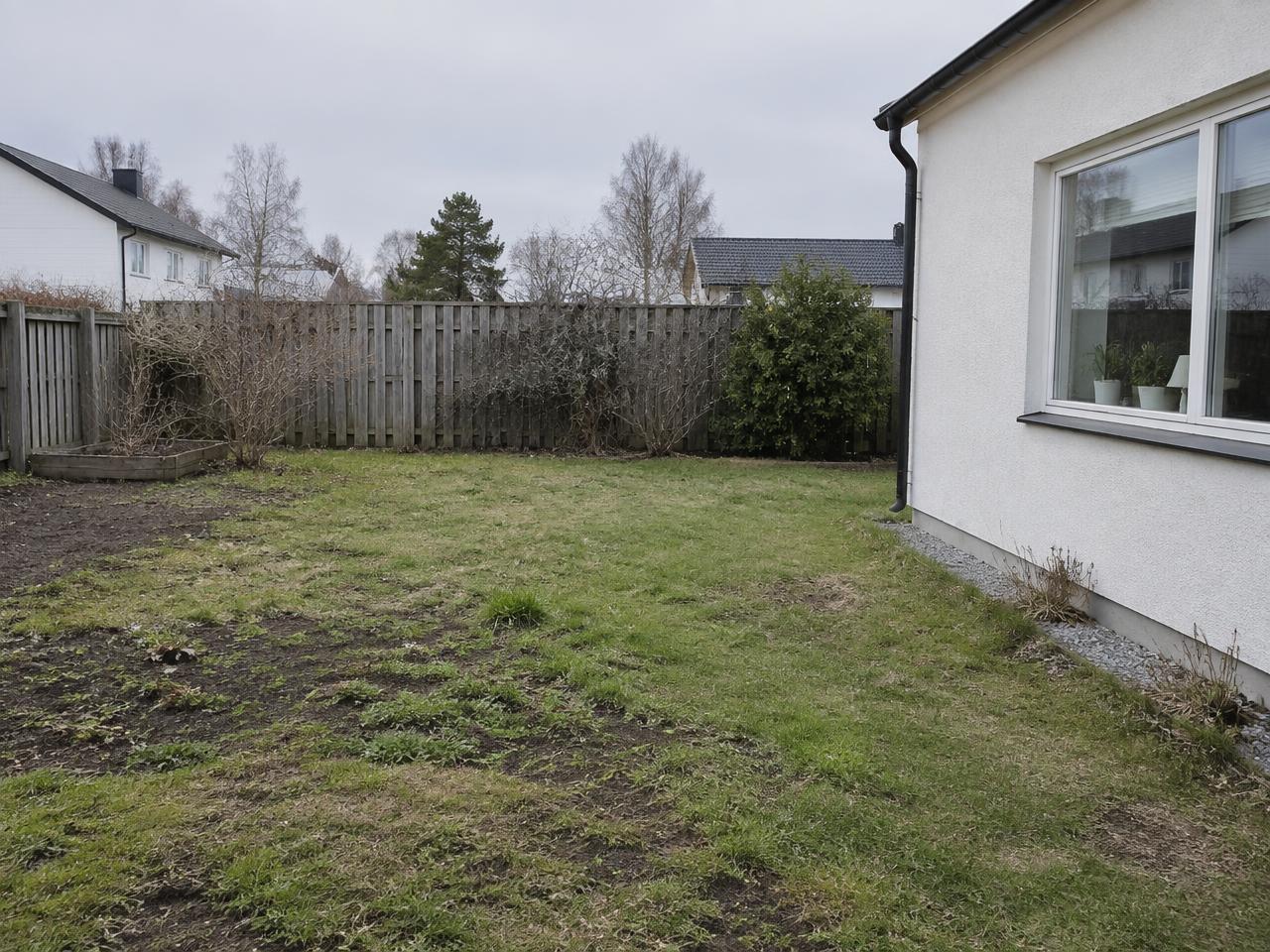
Before — the photo you send
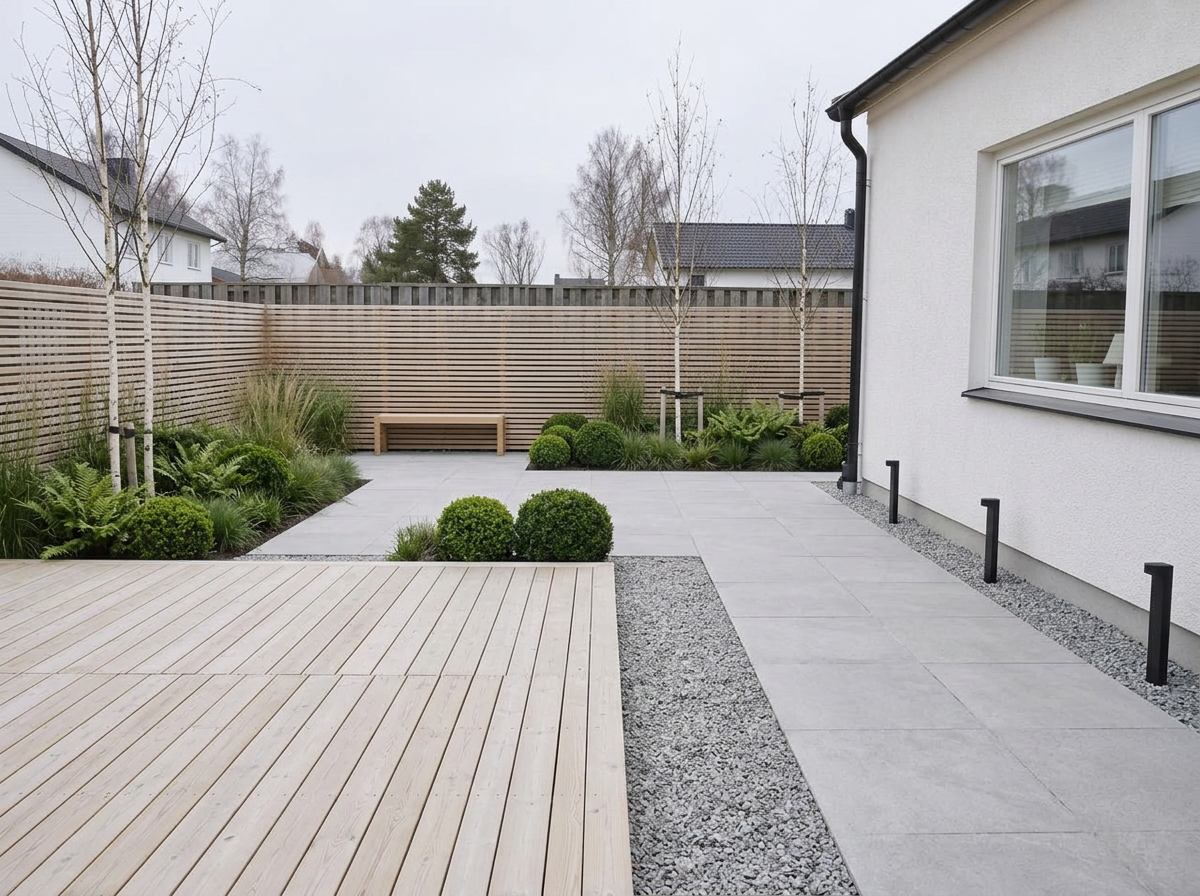
After — AI proposal
4. Build height at the boundary
Small gardens gain from vertical layers: a slatted timber screen, climbers on wires, or two or three multi-stem trees such as birch or amelanchier. Height at the edges draws the eye up and hides the neighbours without stealing floor space. Screens made of 2x4 lumber frames with cladding boards are simple for a local carpenter to build.
5. Plant in repeats
Pick five to seven plants and repeat them, rather than one of everything. A reliable small-garden mix is ornamental grasses for movement, one flowering perennial for a long season, one evergreen for winter structure and a ground cover to keep weeds down. Repetition is what makes a modest planting look designed.
6. Light it low
Two or three low-level lights — a wash on a wall, a light in the tree, a strip under a bench — extend the season and make the garden part of the house in the evening. Skip bright floodlights.
Common mistakes
- Keeping a tiny scrap of lawn that is too small to use and hard to mow.
- Furniture that is too big — measure it before you buy it.
- Narrow beds under 40 cm (16 in), which dry out and never fill in.
- Pushing everything against the fence, leaving a dead middle.
More guides
- Scandinavian garden design: a practical guide
What makes a Nordic garden work — pale timber, gravel, grasses, birch and restraint — and how to apply it to your own yard.
- How much does garden design cost?
Typical costs for garden design and common build elements, plus how an AI garden design fits into the budget.
- How to brief an AI garden design model
A practical, copy-ready guide to describing your space, needs and style so an AI garden model can create a useful proposal.
- How to photograph your garden for an AI design
Which photos to take, from where, in what light — so the AI keeps your house, boundaries and levels while redesigning the garden.
- How to describe garden style and materials
Plain words that actually change a design: decking, gravel, pavers, cladding, screens and planting — with word-by-word examples.
- Measurements and site details to send with your brief
How to measure a garden without a surveyor, and the sun, slope, drainage and access details that make an AI proposal buildable.
- How to ask for revisions that improve your design
Write revision requests the AI can act on: what to keep, what to change, one group of changes at a time, with ready examples.