How to describe garden style and materials
Style words are the least reliable part of most briefs. 'Modern' and 'natural' mean ten different gardens. Name the surfaces, the timber, the planting and the colours instead — everyday words are enough.
8 min read · MyGardenova
Describe surfaces first
The ground covers most of the picture, so it decides how the garden feels. Name what you want underfoot in each area rather than describing an overall mood.
- Timber decking — warm, good next to the house, best in dry or sunny spots.
- Large concrete pavers — calm and modern, good for dining areas and wheeled access.
- Natural stone paving — softer and more textured, usually more expensive.
- Gravel — cheap, permeable, easy to lay, crunches underfoot.
- Lawn — soft for children and pets, needs cutting and light.
- Bark or wood chip — informal, good under trees and around play areas.
Then the vertical things
Boundaries and screens do most of the work on privacy and character. Say what material, roughly how high, and whether light should still pass through.
- Fence panels — solid, quick, ordinary; good for full privacy.
- Slatted timber screen — modern, lets light and air through, popular in Nordic gardens.
- Timber cladding — used on walls, sheds and store fronts for a clean finish.
- Hedge — softest option, takes years, needs trimming.
- Raised planters — built from 2x4 and 4x4 lumber or blocks; screen and plant at once.
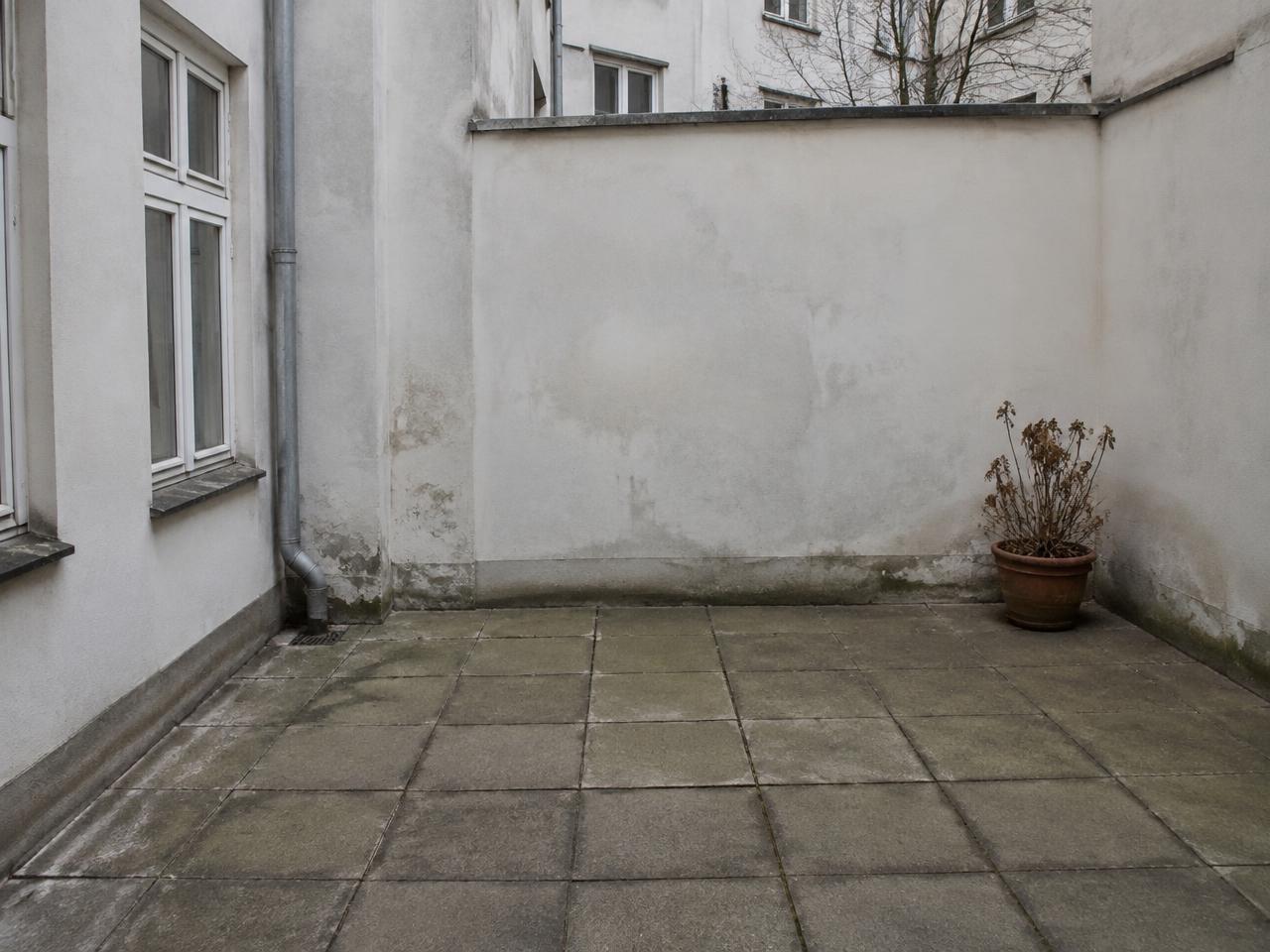
Before — the photo you send
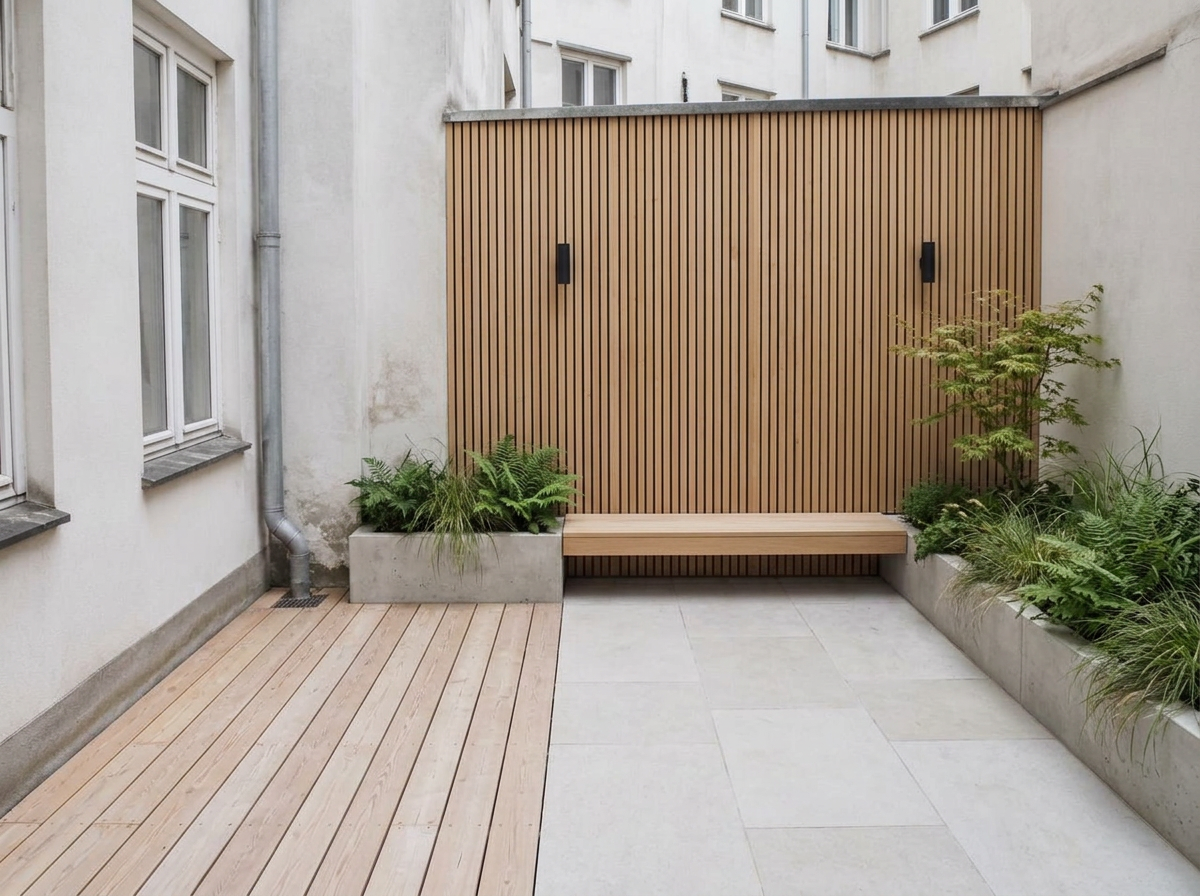
After — AI proposal
Planting in plain words
You do not need Latin names. Describe the shape, the amount of care and the seasons that matter to you, and the model will suggest plants suited to your climate.
- “Repeated ornamental grasses with a few low evergreen shrubs.”
- “One small multi-stem tree for light shade near the seating.”
- “Hardy planting that survives wind and salt, cut back once a year.”
- “Something with colour in spring, and structure that still looks good in winter.”
Colour and finish
Two or three colour notes are plenty: the timber tone, the paving tone and the planting mood. For example “pale untreated timber, light grey pavers, green and silver planting, no bright colours.” Say explicitly what you want to avoid — glossy tiles, red brick, dark stain, tropical planting.
Vague versus useful, side by side
Vague
Make it modern.
Better
Large light grey pavers, straight edges, pale timber deck, no curved borders.
Vague
I want it natural.
Better
Gravel paths, loose grasses, untreated timber and one small tree — nothing clipped.
Vague
Cosy seating.
Better
A sheltered four-person seating area with a slatted screen behind it and warm low lighting.
Vague
Low maintenance.
Better
No lawn, gravel and pavers instead, hardy repeated planting, one annual cut-back.
Style names still help — as a shortcut
A style word is useful when it comes with materials attached. “Scandinavian: pale timber, gravel, grasses, birch, restrained colours” tells the model both the feeling and the parts. Used alone, it leaves too much open. The same applies to “Mediterranean,” “cottage,” and “Japanese-influenced.”
What comes back
Your proposal includes two coordinated views plus a plain-language material list — 2x4 and 4x4 lumber, cladding, pavers, gravel, fence panels, planters — with rough costs and build phases. These are planning ideas, not construction drawings or an exact planting schedule.
More guides
- Small backyard design ideas that actually fit
Layout ideas for small backyards: zones, seating, screening, planting and materials — with AI before and after examples.
- Scandinavian garden design: a practical guide
What makes a Nordic garden work — pale timber, gravel, grasses, birch and restraint — and how to apply it to your own yard.
- How much does garden design cost?
Typical costs for garden design and common build elements, plus how an AI garden design fits into the budget.
- How to brief an AI garden design model
A practical, copy-ready guide to describing your space, needs and style so an AI garden model can create a useful proposal.
- How to photograph your garden for an AI design
Which photos to take, from where, in what light — so the AI keeps your house, boundaries and levels while redesigning the garden.
- Measurements and site details to send with your brief
How to measure a garden without a surveyor, and the sun, slope, drainage and access details that make an AI proposal buildable.
- How to ask for revisions that improve your design
Write revision requests the AI can act on: what to keep, what to change, one group of changes at a time, with ready examples.